The Equandia series
Five books follow Luna's life from age 8 to 18, and a sixth companion book tells the story of Ana, three hundred years earlier. Here is each one, with what you learn in every chapter.
Project in development · on hold while we look for a partner institution
Not yet available for sale. No book has a price or publication date yet.
Only Book 1 has an English manuscript; English titles and summaries of Books 2 to 6 are working translations.
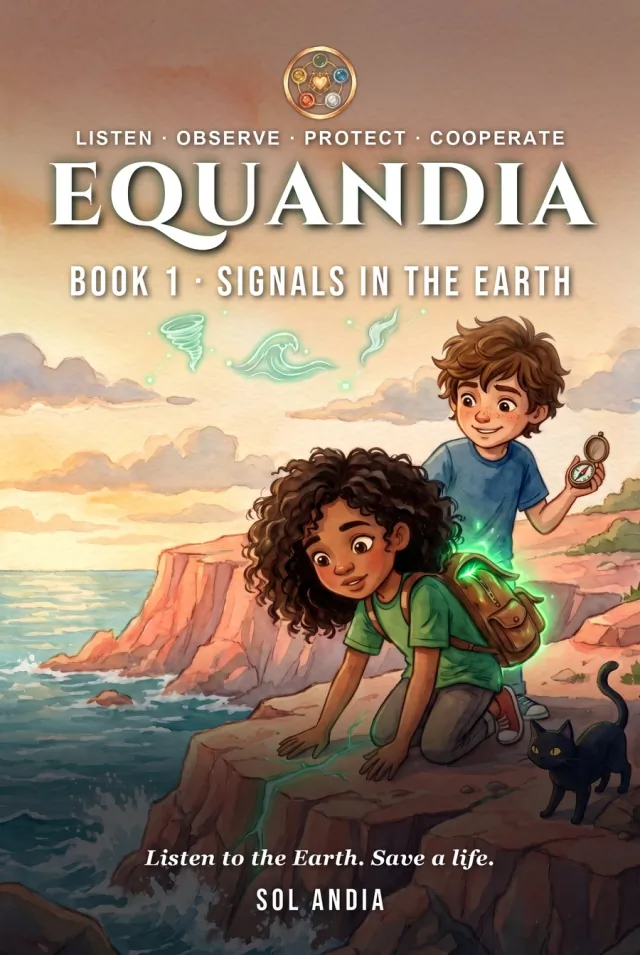
Book 1
Signals in the Earth
Recommended age: ages 9 to 12
Status: Book written · chapters 1 to 3 free on the website · Not yet available for sale
Luna is eight years old, and she hears what grown-ups miss: the Earth whispers, and she understands. When an earthquake awakens her gift, she receives AMI, a backpack of scientific instruments that only work if you know how to ask with precision, and sets off on twelve missions across nine biomes to learn to read nature's signals. With Gael, Tomás and other young Guardians she will discover that protecting her people is not something you do alone.
Theme: The science of natural disasters: reading nature's signals and preparing for earthquakes, tsunamis, floods, volcanoes and more.
Chapters and learning
- Chapter 1FreeThe First SignalYou learn: Which signs are linked to earthquakes, and why small tremors can only be recognized as foreshocks after a larger quake.
- Chapter 2FreeWhen the River Goes QuietYou learn: If a river suddenly drops, there may be a blockage upstream and the risk of a flash flood.
- Chapter 3FreeThe Screaming WindYou learn: The signs of a tornado: wind that changes direction very fast (wind shear) and wall clouds.
- Chapter 4In developmentAshes on the HorizonYou learn: Observatories watch volcanoes with instruments that measure gases, tremors and ground deformation.
- Chapter 5In developmentThe Breathing ForestYou learn: Waterlogged soil is one of the main causes of landslides.
- Chapter 6In developmentUmbra's ShadowYou learn: Tsunami signs: if you feel a strong or long earthquake near the sea, do not wait to see the water; run to high ground.
- Chapter 7In developmentThe Thirsty DesertYou learn: What hydrological drought is and how the water in rivers, reservoirs and aquifers is measured, even from satellites.
- Chapter 8In developmentSinging IceYou learn: Why glaciers retreat with climate change and how blocks of ice break off.
- Chapter 9In developmentThe Perfect StormYou learn: How a hurricane forms: sea water above 26.5 °C and weak winds between the layers of the atmosphere.
- Chapter 10In developmentRoots That CallYou learn: Wildfire risk: with very dry air and strong wind, vegetation becomes flammable.
- Chapter 11In developmentThe Sleeping CityYou learn: No one can predict an earthquake: small tremors and groundwater changes are studied, but they cannot be used as warnings.
- Chapter 12In developmentThe First StepYou learn: Disasters can chain together (drought, heat, wildfires, polluted air), and climate change amplifies them.
Read chapters 1 to 3 free
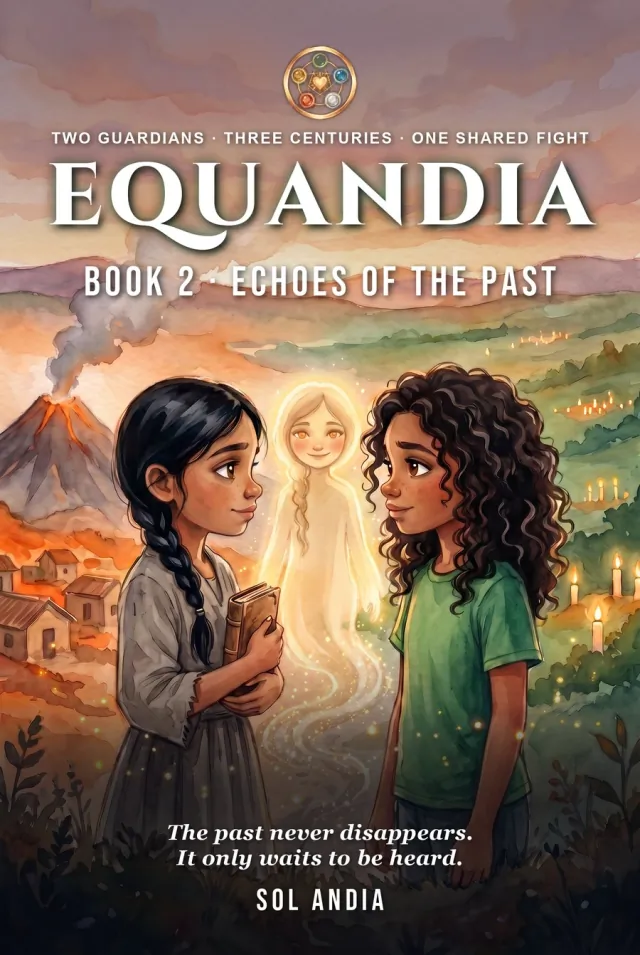
Book 2
Echoes of the Past
Recommended age: ages 10 to 12
Status: In development · Not yet available for sale
Two years after discovering her gift, Luna is ten and has a secret: every night she dreams of Ana, a girl who lived three hundred years ago and who could also hear the Earth. When she finds Ana's buried diaries, Luna realizes that an old wound in Equandia never healed. To stop a new catastrophe, she will have to listen to the past and break the cycle of silence.
Theme: Historical memory: listening to the past, oral history and how the wounds of a disaster pass from one generation to the next.
Chapters and learning
- Chapter 1Two Years LaterYou learn: After a disaster some children show signs of post-traumatic stress; most recover over time.
- Chapter 2The First DreamYou learn: Governments sometimes hide uncomfortable historical records, and the truth can take decades to come out.
- Chapter 3The Girl from the PastYou learn: There are many stories of animals acting strangely before a disaster, but science has not confirmed a reliable signal for earthquakes.
- Chapter 4Forbidden ArchivesYou learn: Hiding information about a disaster makes the harm worse, and some people risked everything to protect history.
- Chapter 5The Broken SilenceYou learn: Some disasters recur in the same area, but never on fixed dates: no one can predict when the next one will be.
- Chapter 6The First GuardianYou learn: Why societies search for and identify their missing after a tragedy.
- Chapter 7The Price of SilenceYou learn: When everything collapses in a catastrophe, identifying the victims becomes very hard; landslides are geological processes, not punishments.
- Chapter 8Ana's Last LetterYou learn: The value of diaries left by children in hard times, like Anne Frank's.
- Chapter 9Truth vs. PeaceYou learn: What truth commissions are, and the dilemma between knowing the past and keeping social peace.
- Chapter 10The Ritual of RemembranceYou learn: Collective mourning rituals help a country remember its victims.
- Chapter 11Ana's LegacyYou learn: Apologizing for historical wrongs and creating memorial museums are ways to make amends.
- Chapter 12Two Guardians, Three CenturiesYou learn: Memorial forests and living memorials keep alive the memory of those who were lost.
See the book page
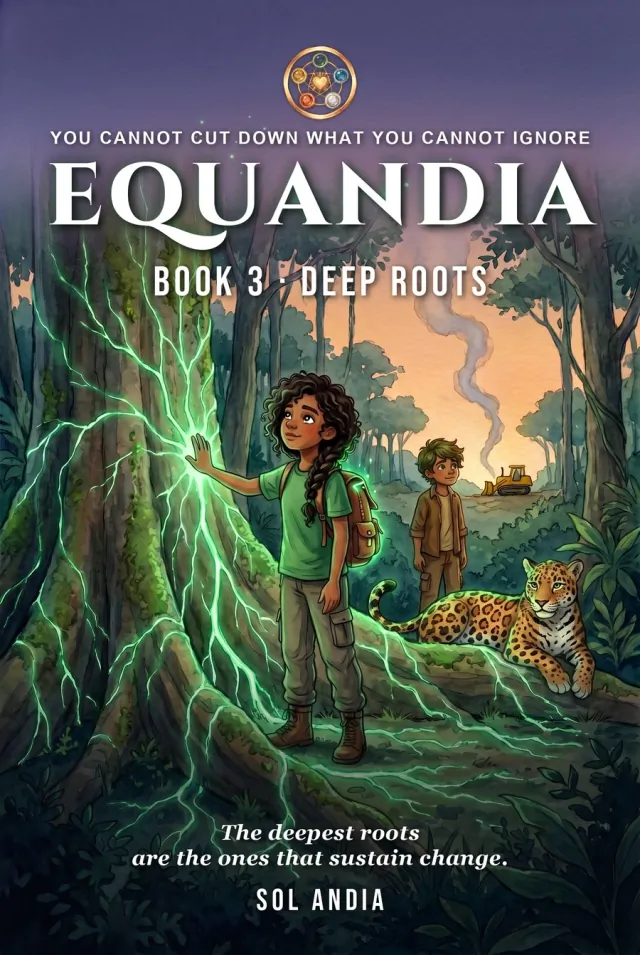
Book 3
Deep Roots
Recommended age: ages 11 to 13
Status: In development · Not yet available for sale
At twelve, Luna is no longer the unsure girl who discovered her gift: she is a student leader and the voice of a generation. When a logging company starts cutting down the rainforest where her friend Gael lives, her challenge is not a natural disaster but a system that would rather ignore the warning signs. Luna will learn that changing things is harder than predicting a tsunami.
Theme: Deforestation, biodiversity and mycorrhizal networks, together with youth participation and peaceful environmental activism.
Chapters and learning
- Chapter 1Two Years Later (Again)You learn: Young people can speak before governments, and companies influence politics with money.
- Chapter 2The Screaming ForestYou learn: Deforestation, driven mostly by farmland expansion, threatens biodiversity.
- Chapter 3The Brigade GathersYou learn: How social media helps people organize, and why Indigenous communities protect forests.
- Chapter 4Fifty Thousand VoicesYou learn: Peaceful student marches can have political impact.
- Chapter 5Resistance CampYou learn: Historical examples of protests that protected land, such as the Chipko movement in India.
- Chapter 6Umbra in the ShadowsYou learn: Some companies spy on activists, and movements protect themselves by sharing information.
- Chapter 7When the Corporations Strike BackYou learn: How to recognize disinformation campaigns, like those that sowed doubt about climate change.
- Chapter 8Partial VictoryYou learn: Boycotts and consumer pressure can make companies change.
- Chapter 9Deep RootsYou learn: Mycorrhizal networks: fungi that connect tree roots, and which parts of that idea are still debated.
- Chapter 10Rosa's LegacyYou learn: The idea of mother trees: why it is appealing and why science has not yet proven it in real forests.
- Chapter 11One Year LaterYou learn: Some countries recognize the rights of nature, as Ecuador does in its Constitution.
- Chapter 12Spreading Roots (Epilogue)You learn: Reforestation and assisted natural regeneration help ecosystems recover.
See the book page
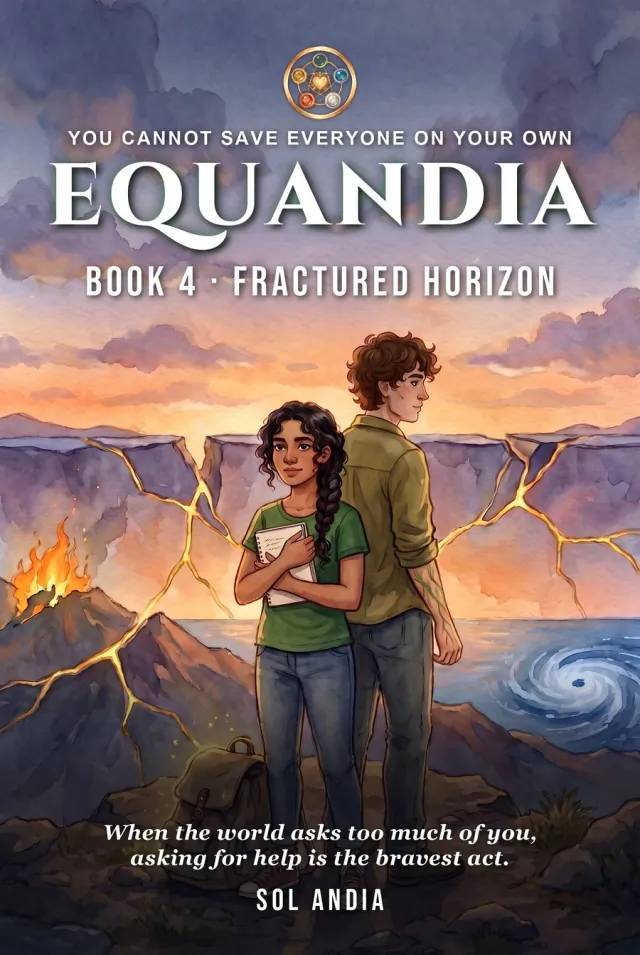
Book 4
Fractured Horizon
Recommended age: ages 12 to 14
Status: In development · Not yet available for sale
Luna is thirteen and a half, and her biggest challenge now is finding balance. As climate change makes disasters more extreme, she discovers that asking for help is not weakness and that sharing the work multiplies what one person can do. Together with Gael she will learn about resilience and about looking after herself so she can keep looking after others.
Theme: Climate change and extreme disasters (wildfires, hurricanes), together with mental health, self-care and teamwork.
Chapters and learning
- Chapter 1The Weight of the SignalsYou learn: Compassion fatigue: helping others without rest wears you out too.
- Chapter 2The First CrackYou learn: How a wildfire behaves: drought, heat and wind make it more dangerous, and fire climbs faster uphill.
- Chapter 3The Weight of GuiltYou learn: No one can control every outcome: believing you are responsible for everything leads to exhaustion.
- Chapter 4Umbra RebornYou learn: Human-caused climate change already affects extreme weather in every region of the world.
- Chapter 5The First Super HurricaneYou learn: The Saffir-Simpson hurricane scale and why a warmer ocean can make hurricanes more intense.
- Chapter 6When Everything BreaksYou learn: What burnout (extreme exhaustion) is and what its signs are.
- Chapter 7Learning to DelegateYou learn: Delegating is not abandoning: sharing tasks multiplies impact and protects against burnout.
- Chapter 8Rediscovering LunaYou learn: Having several roles and hobbies holds up your identity when one of them fails.
- Chapter 9Gael ReturnsYou learn: Recovering from a serious burn takes time and rehabilitation: resilience is built step by step.
- Chapter 10The Test of Hurricane BoreasYou learn: The Incident Command System lets many teams work together in an emergency.
- Chapter 11Umbra Returns (with a Lesson)You learn: A movement only lasts if it has limits, rest and rotating leadership.
- Chapter 12Horizon RestoredYou learn: Balancing school, family, causes and hobbies is not splitting time evenly: it is adjusting priorities to the moment.
See the book page
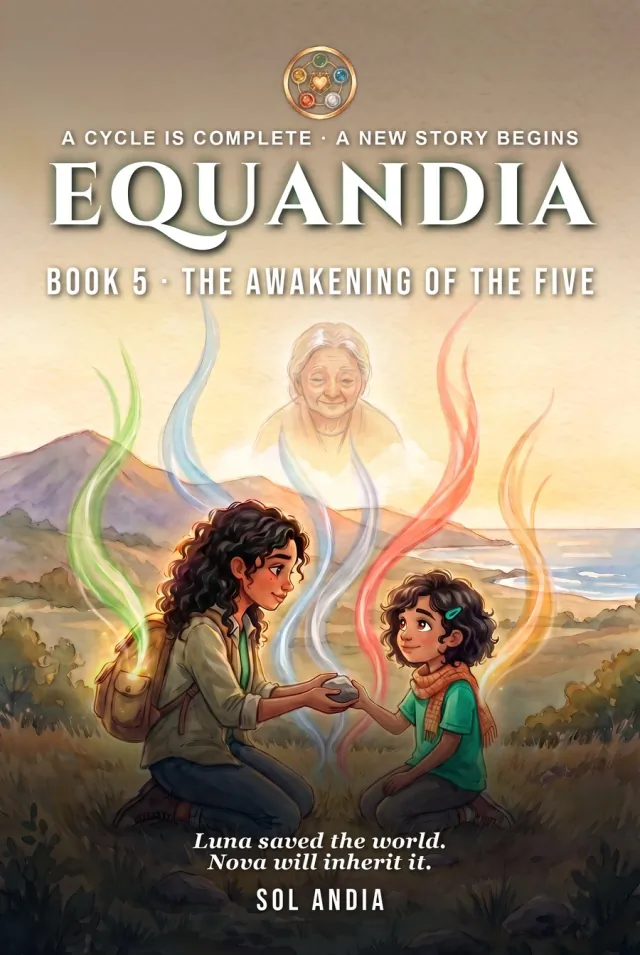
Book 5
The Awakening of the Five
Recommended age: ages 12 to 15
Status: In development · Not yet available for sale
Luna is sixteen and has changed the world, but now she faces the hardest question: who will she be after being a Guardian? Her mission is to find the next Guardian, an eight-year-old girl with the gift, teach her everything she knows and then learn to let go. It is the book of endings and of passing the torch.
Theme: Leadership and handing over between generations: teaching others, preparing succession and leaving a legacy, against a backdrop of tsunamis, wildfires and earthquakes.
Chapters and learning
- Chapter 1The Last SunriseYou learn: Good leaders prepare their succession and know when to step aside.
- Chapter 2The Funeral of a LegendYou learn: Collective mourning: how a community says goodbye to and remembers someone who changed it.
- Chapter 3Finding NovaYou learn: Some children are very perceptive to changes in their surroundings: it is not magic, it is observation and empathy.
- Chapter 4The First LessonYou learn: You learn best by doing: the "see one, do one, teach one" method.
- Chapter 5The First TestYou learn: Early evacuation and tsunami warning systems save lives.
- Chapter 6Two GuardiansYou learn: A megafire requires coordinating many teams: no one evacuates thousands of people alone.
- Chapter 7The Hardest LessonYou learn: Even with the best preparation, a disaster can claim lives: you cannot save everyone.
- Chapter 8The Road AheadYou learn: A full life, with studies and other passions, makes a commitment to a cause more sustainable.
- Chapter 9AcceptanceYou learn: Letting go of control is hard, but necessary so others can grow and make their own decisions.
- Chapter 10The Last Mission TogetherYou learn: Ceremonies and rituals help people go through life's big changes.
- Chapter 11FarewellsYou learn: Saying goodbye with intention helps close a chapter of life.
- Chapter 12Full CircleYou learn: The most lasting impact is what you teach others.
- EpilogueTen Years LaterYou learn: To be confirmed
See the book page
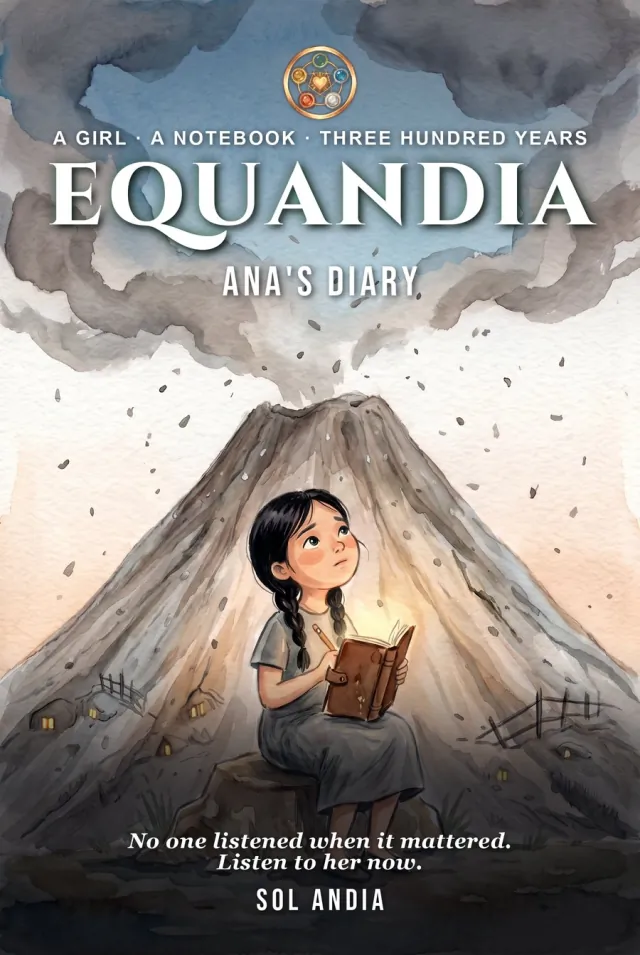
Book 6 · Companion book to the saga
Ana's Diary
Recommended age: ages 10 and up
Status: In development · Not yet available for sale
Ana Méndez was eight when the ants began marching south and no one but her would look at the column of smoke above the volcano. For four years she wrote everything down in her notebooks, dated and in her own hand. Three hundred years later, Luna Solari finds them and promises what no one did in time: to listen to her.
Theme: Observing and recording nature's signals (a volcanic eruption) and the value of memory against forgetting.
Chapters and learning
- PrologueBefore the First PageYou learn: Writing with dates and data turns what you observe into a record others can understand.
- Part 1The SignsYou learn: Observing and measuring changes in nature; the phenomena Ana records are real, although it is not proven that animals warn of a disaster.
- Part 2The Mountain ScreamsYou learn: After an eruption, ash can make roofs collapse: no one goes back into an affected area until the authorities say it is safe.
- Part 3The Broken SilenceYou learn: Science studies the signs, but no one can name the exact day of a disaster; knowing something is coming is enough to prepare.
- Part 4The FiftyYou learn: There are many ways to document, and writing down people's names protects their memory.
- Part 5Tell Me BraveYou learn: Bearing witness is a form of courage: memory defeats forgetting.
- EpilogueLuna, TodayYou learn: A community heals by remembering together: telling the truth, naming the victims and creating places of memory.
See the book page