From dawn to night
A day in the Central Valley
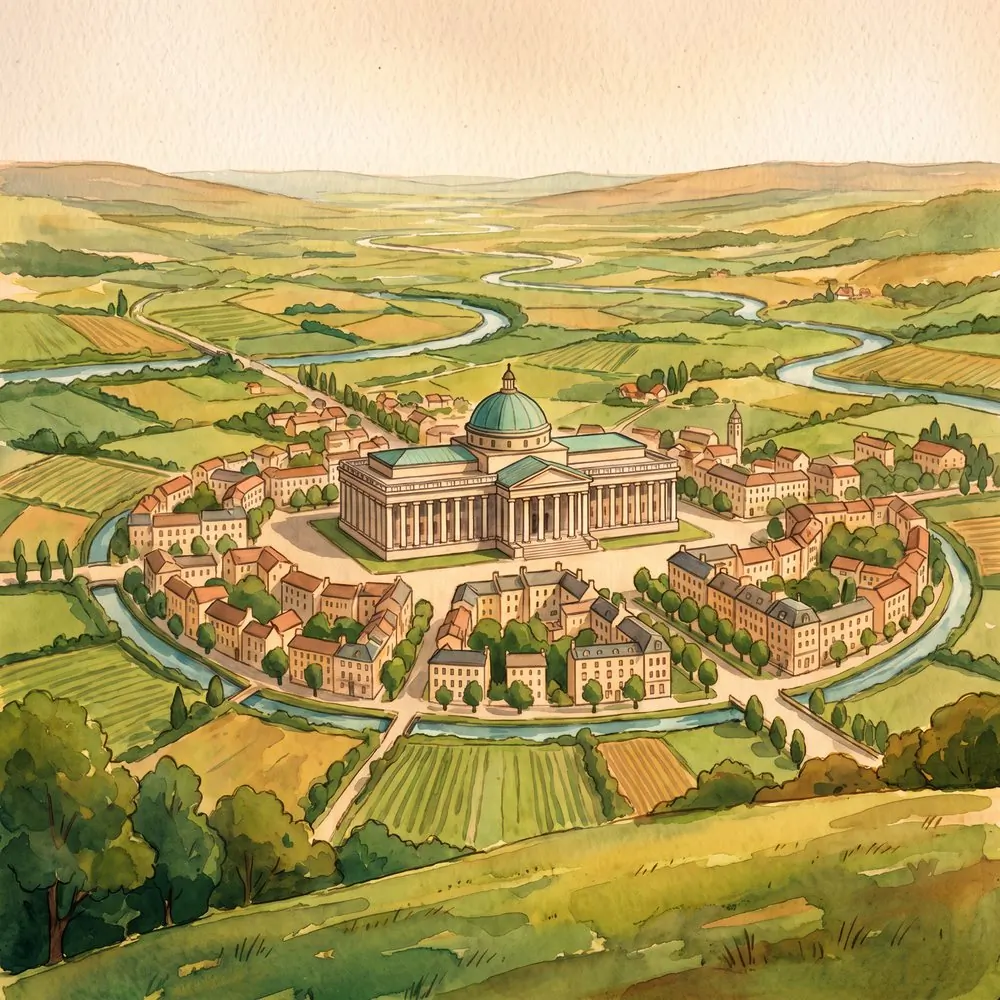
The Central Valley is the heart of Equandia: farm plots, irrigation channels, markets and, at the center, the Congress. Here life follows the rhythm of the water and the sun. If you spent a whole day in the valley, this is what you would see.
-
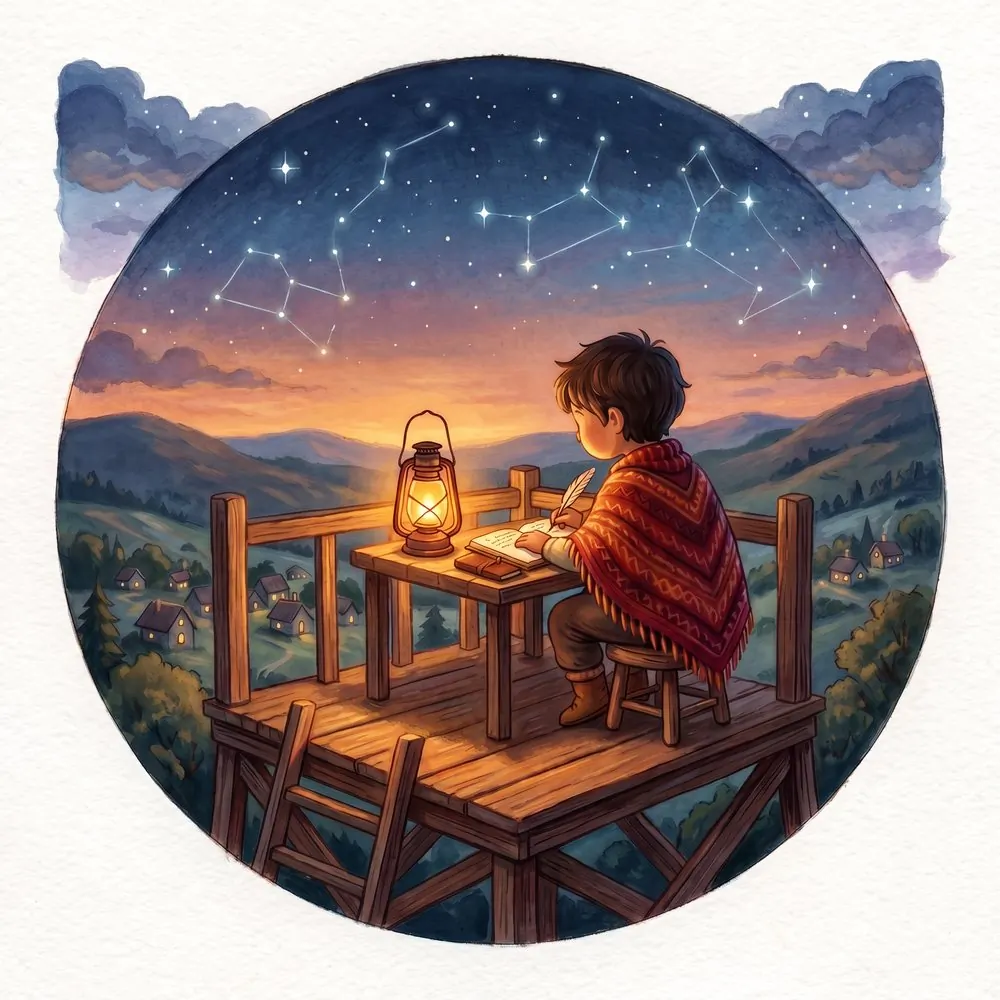
Still dark out Before dawn
While the valley sleeps, someone is awake: the Guardian on watch. They check the sky, the wind and the silence, and write it all down in their notebook. Almost always, nothing happens. That "almost" is their job.
-
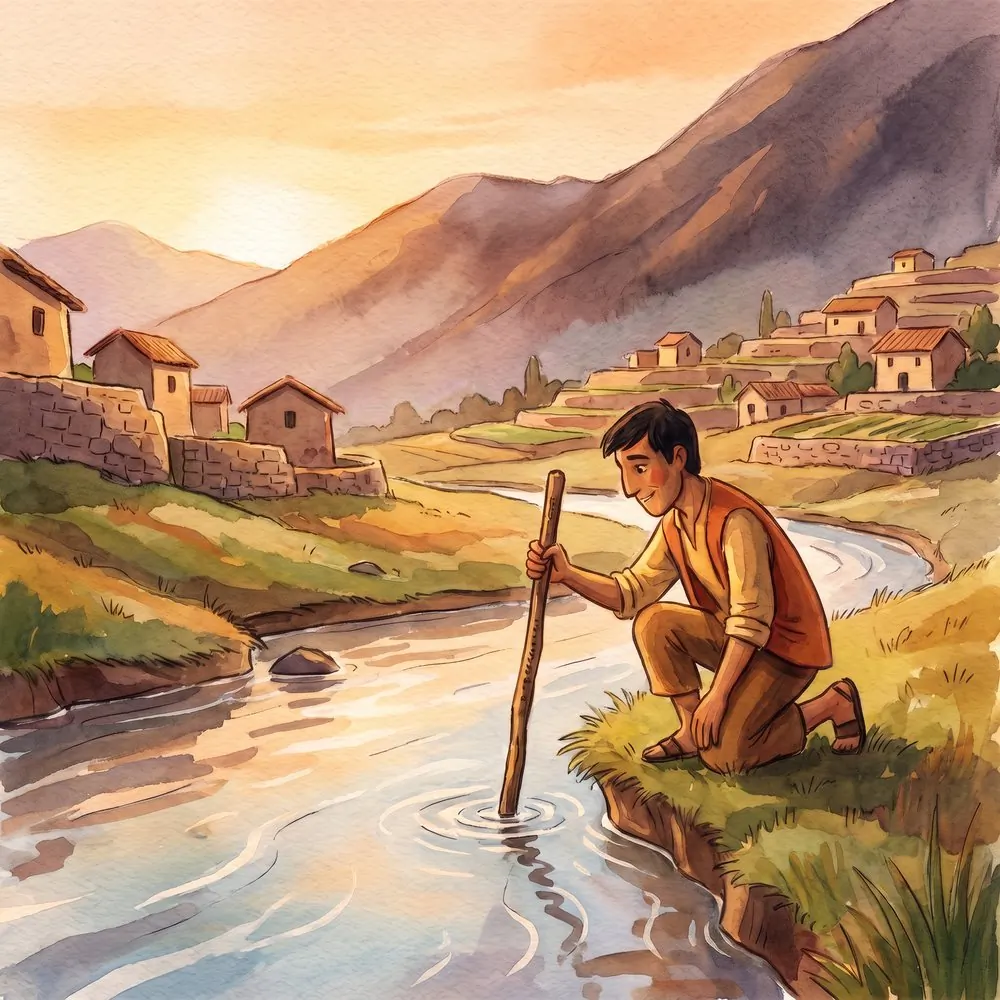
Water first Dawn
The valley's oldest custom: measuring the level of the river and the channels the moment the sun comes up. If the water looks strange at daybreak (too high, too muddy, too still), the whole day changes plans.
-
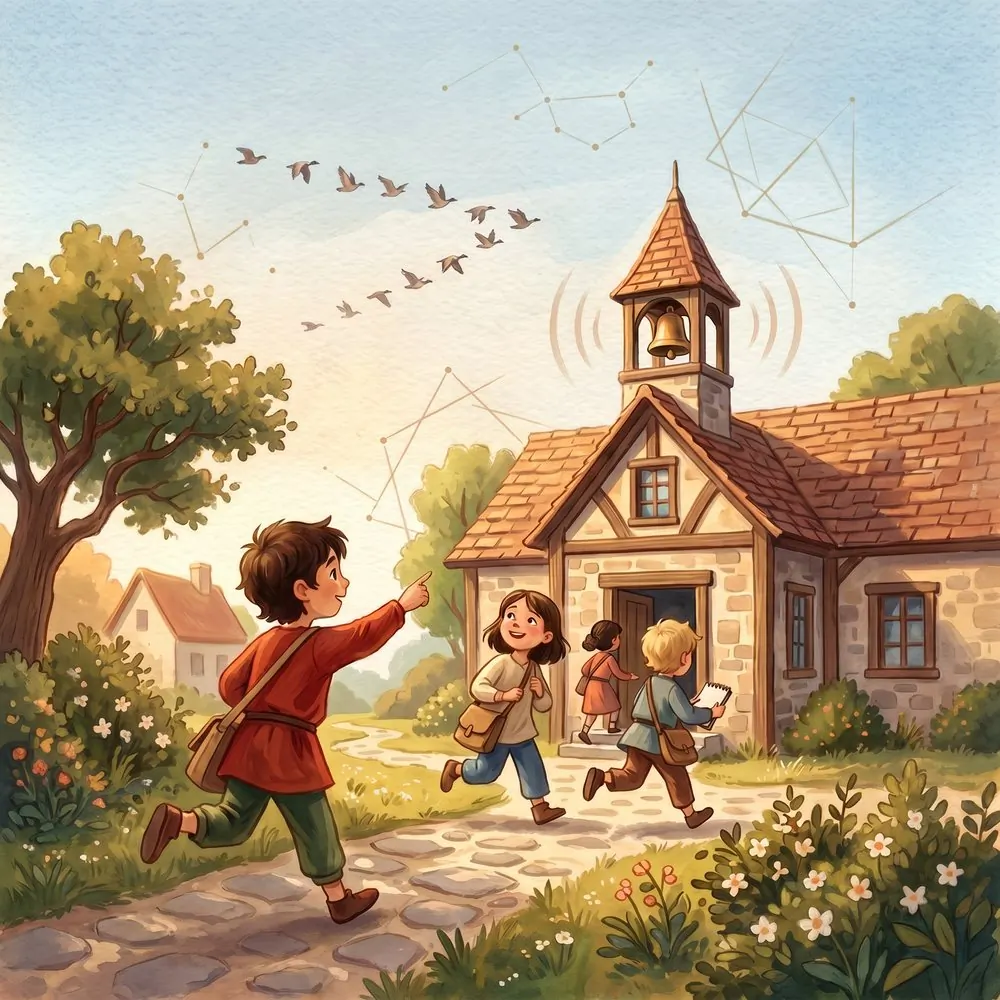
The school bell Mid-morning
Besides math and reading, every child in Equandia learns one more thing: how to recognize the Earth's basic signals. To them it is as normal as learning to cross the street.
-
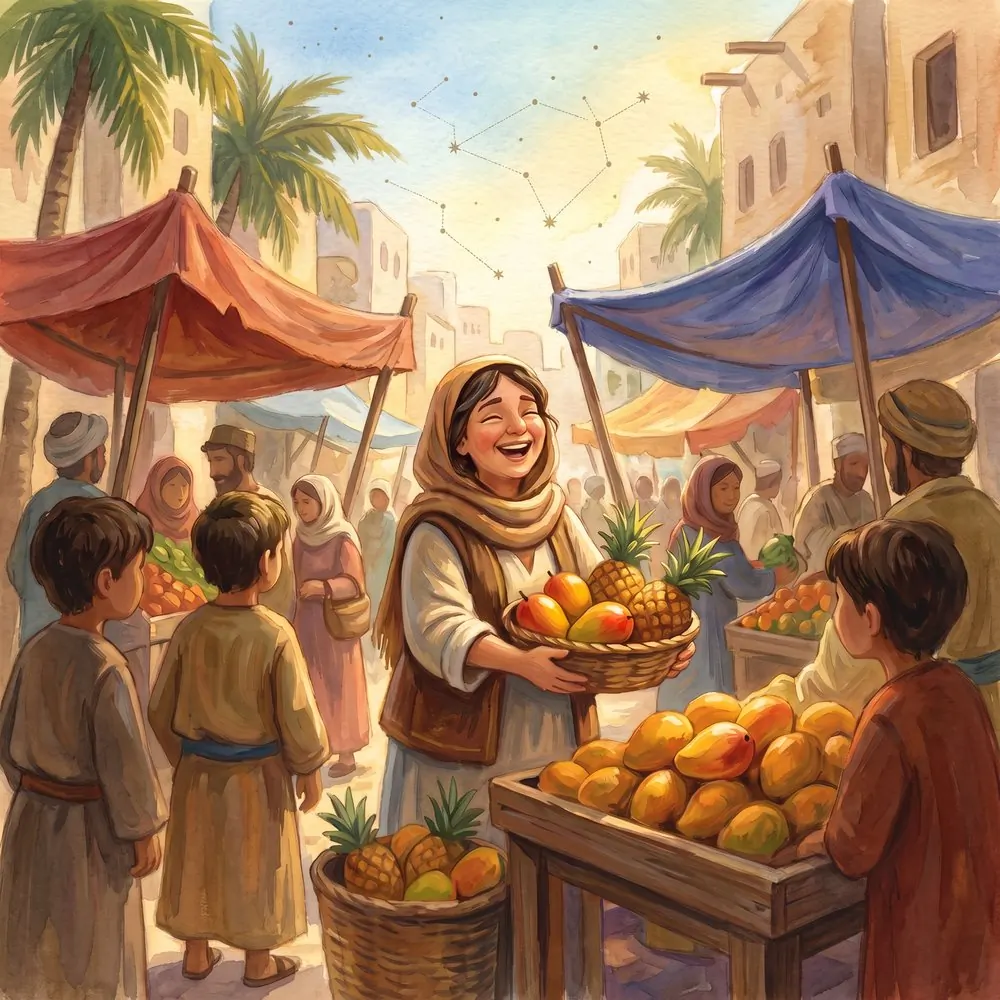
The market in full sun Midday
Strong sun, crowded markets and sellers of mangoes and pineapples on the corners. In front of the Congress, tourists from other biomes take photos. If you listen closely, the whole valley is a murmur: water, bells and distant tractors.
-
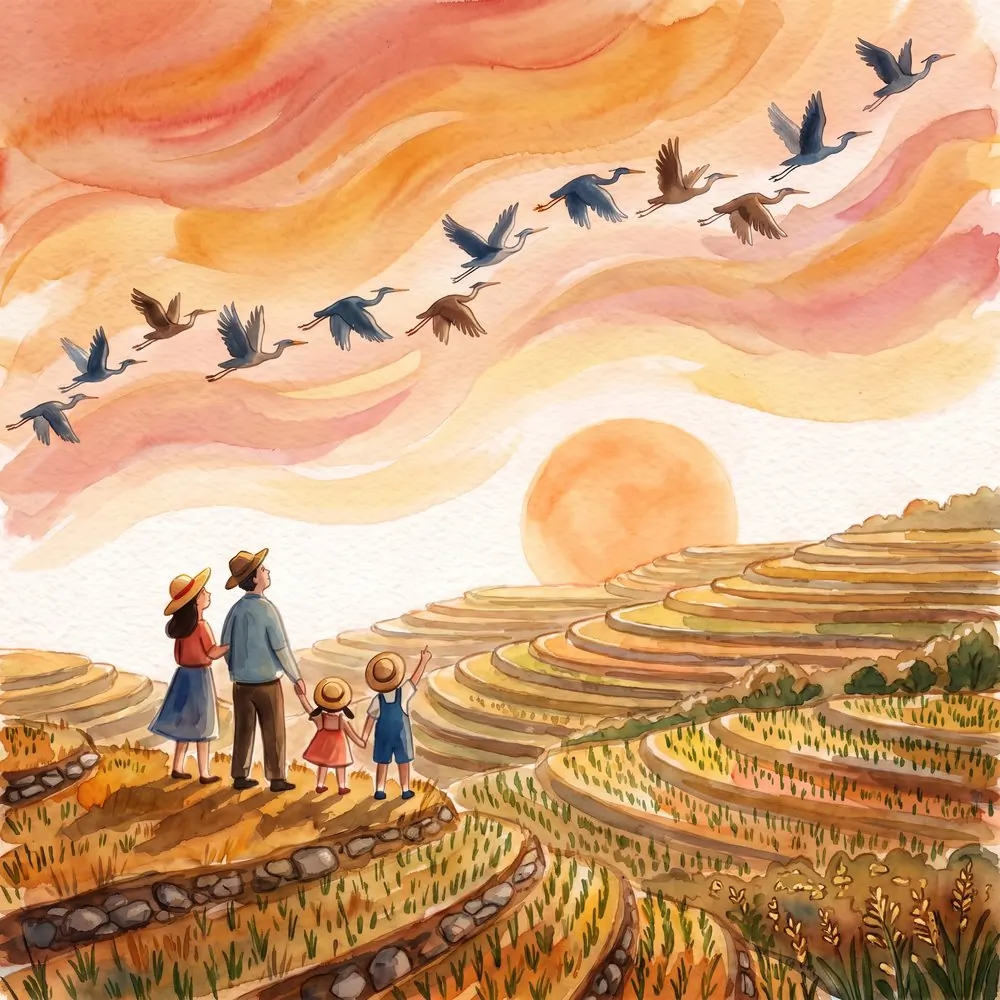
Farm plots and herons Afternoon
On the farm plots, people work watching two things at once: the crop and the sky. The Messenger Herons cross the valley in formation, and if a flock breaks apart for no reason, someone writes it down. A single signal is nothing. But it gets written down.
-
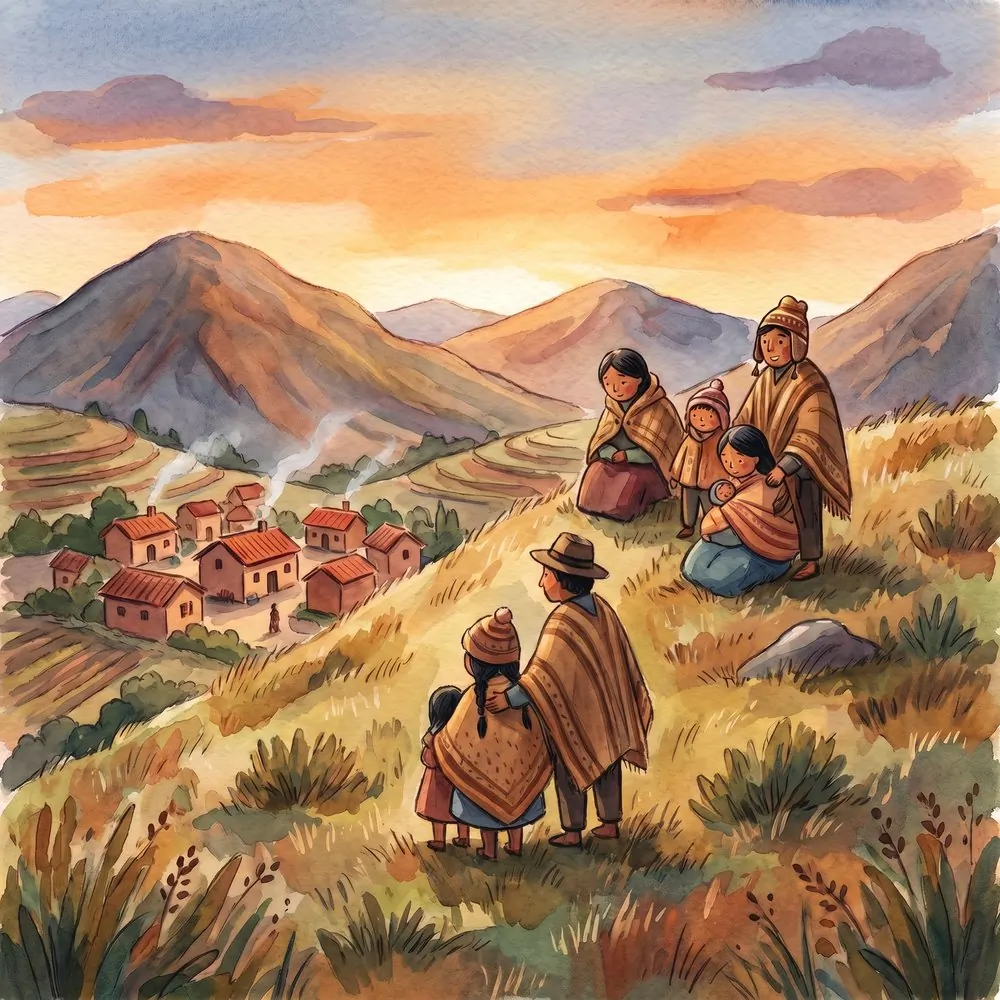
The golden valley Sunset
The light drops and everything turns the color of wheat. Families head home along the paths between the channels and, out of the corner of their eye, glance at the Compass Flowers on the edge: if their petals point firmly north, the Earth is calm.
-
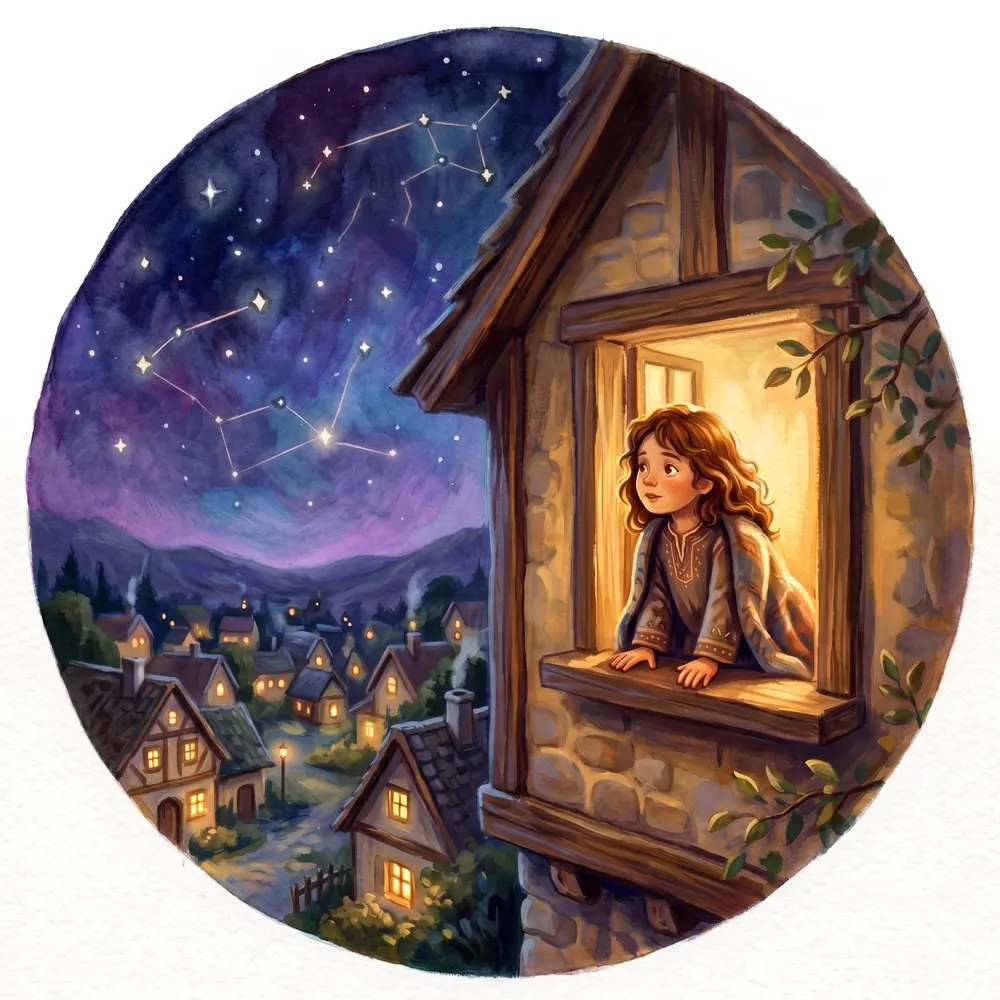
Crickets and plans Night
Clear sky, crickets and the murmur of water. Before bed, many families go over their plan: what to bring, where to go, who to warn. They do not do it out of fear, they do it out of habit. In Equandia, being prepared is as normal as brushing your teeth.
Where the Guardians are trained
The School of Signals
In Equandia there are two kinds of school. The everyday one, where every child learns the basic signals along with math and reading. And a special one: the School of Signals, where those who want to become Guardians study. Its students wear a dark green shirt with the emblem embroidered on it, and each one carries a notebook they never lend to anyone.
The heart of everything taught there fits into five steps:
Observe
Really look, without jumping to conclusions. What is happening, exactly?
Record
Write it down with the date, time and place. Memory fails. Notebooks do not.
Put in context
Is it normal for this place and this time of year? Grandparents almost always know the answer.
Triangulate
One signal is a clue. Three signals that agree are a warning.
Act
Warn whoever needs to know and move calmly. Information that is not used protects no one.
And there is a sixth step that appears in no official plan, but that the best Guardians always practice: sharing what they learned. A signal read well but never told to the community saves no one.
Students also learn to read each element (earth, water, wind, fire and life), to run drills until the body knows the route by heart, and something harder: how to be wrong without giving up. Not even the best Guardian gets it right every time.
How was this school born, who taught the first class and why? That is discovered by reading the books.
The gift explained
How you listen to the Earth
In Equandia everyone feels something when the Earth is about to change: a shiver, a hunch, a strange silence. But a few people are born with the gift: they can read those signals as clearly as you read this page. Those people are called Guardians.
The gift is not a superpower with a cape and lightning bolts. It is attention taken to the maximum: feeling a hum under your feet hours before everyone else, noticing that the seagulls all went quiet at the same time, understanding what the water is trying to say when it runs muddy without any rain. And it has a cost: a Guardian never fully stops listening, not even in their sleep. That is why they train, write things down, and share.
The rules everyone in Equandia knows:
- Signals never lie, but people can misread them.
- Several signals pointing to the same thing deserve more attention than a single one.
- The absence of the usual signals is also a signal.
- Signals are written down, not just remembered.
Reality and fantasy
The natural phenomena in Equandia (earthquakes, tsunamis, hurricanes, eruptions) are real, and so are the safety measures that appear in the books. The gift is fantasy: in the real world, no person or technology can predict an earthquake.
What all of us can do is prepare and know what to do, and that is exactly what this series teaches. More about what is real and what is not, in the guide for parents and teachers and in the educational resources.
The field gear
AMI and a Guardian's tools
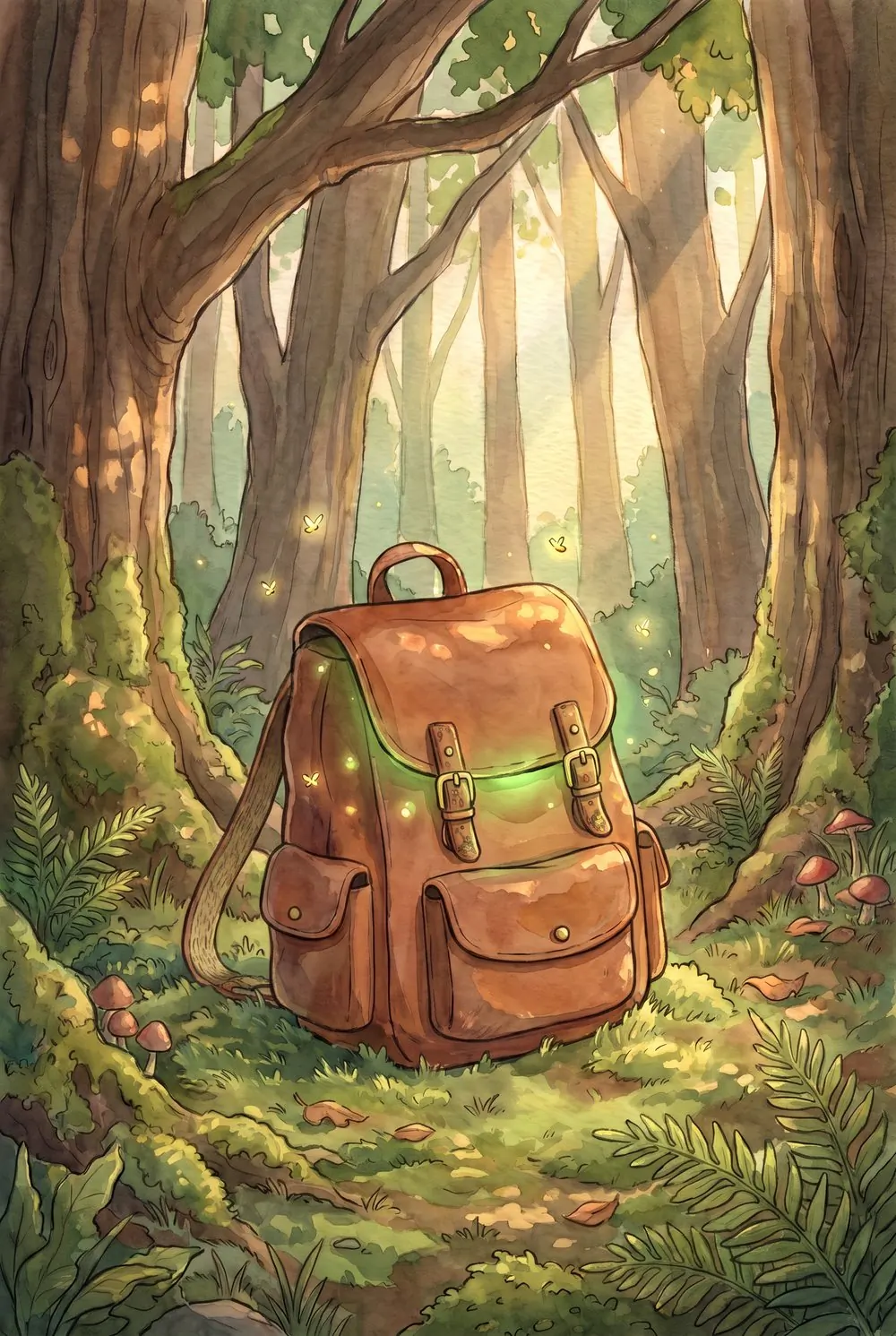
AMI looks like an ordinary backpack. It is three hundred years old. It does not talk, it does not fly and it does not do magic at random: it materializes the tool you need, but only if you ask out loud and with precision. "Give me something for the water" does not work. "AMI, I need a one-liter container to take a sample from the river" does.
That is why the Guardians say AMI does not reward magic, it rewards clear thinking: to ask well, you first have to know exactly what you are looking for.
And there is one thing AMI can never do: predict a disaster. No object in Equandia can. Listening to the Earth is the work of people, not of gadgets.
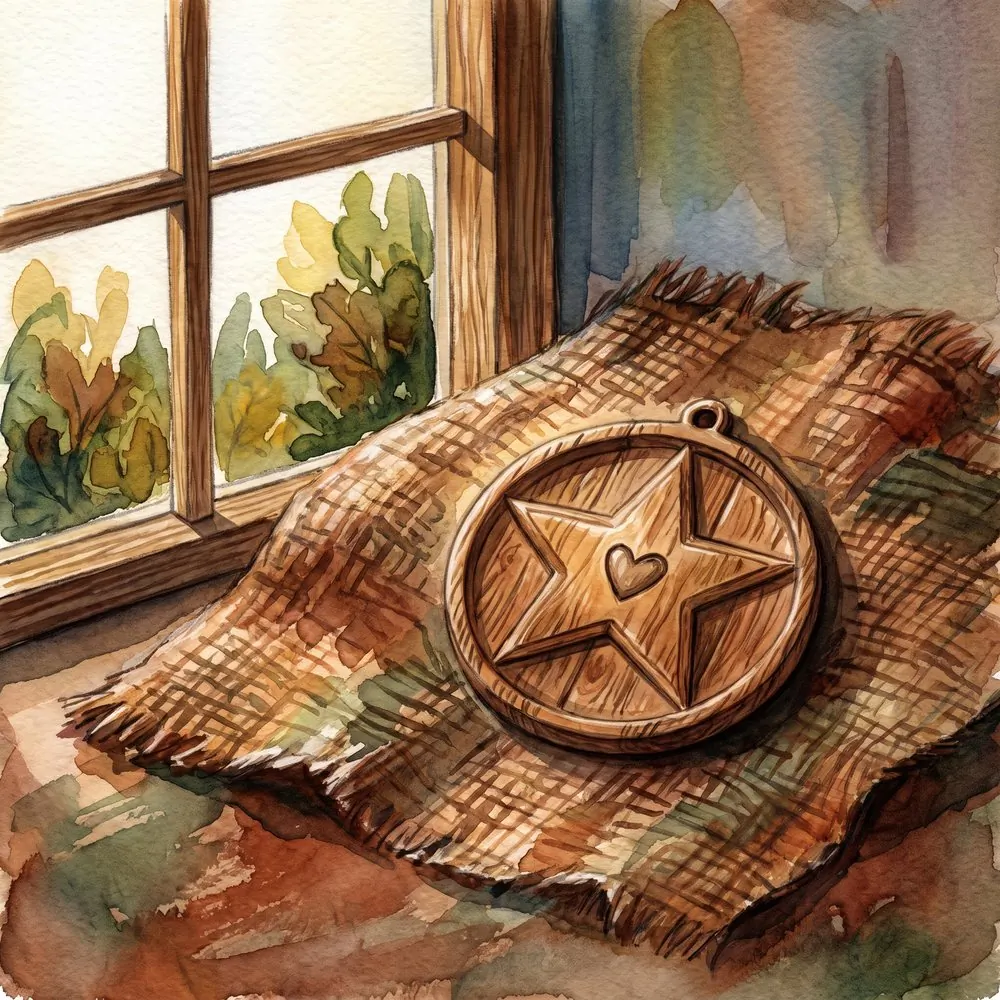
The Guardians' Medallion
It passes from generation to generation. It grants no powers: it reminds whoever wears it that others listened before, and that more will come after.
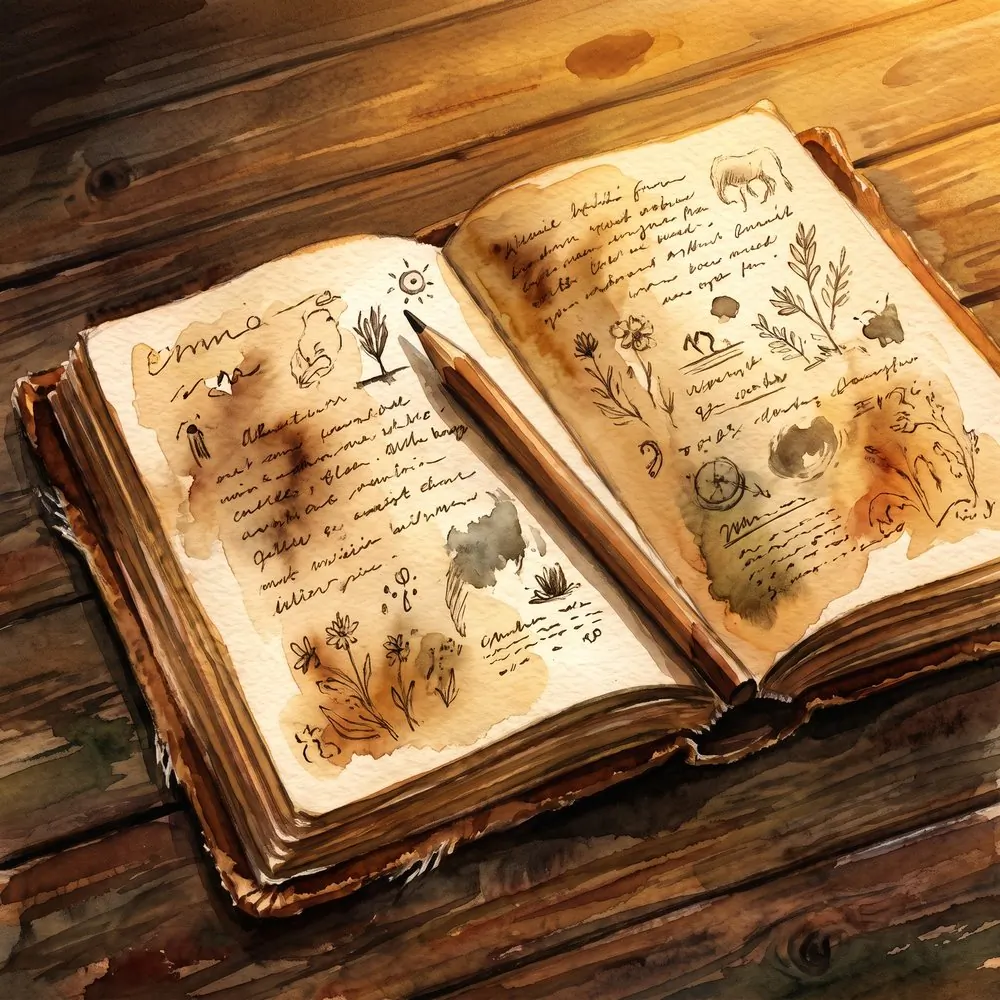
The notebook
The real working tool. Date, time, place, sketch and detail. A Guardian trusts their notebook more than their memory.
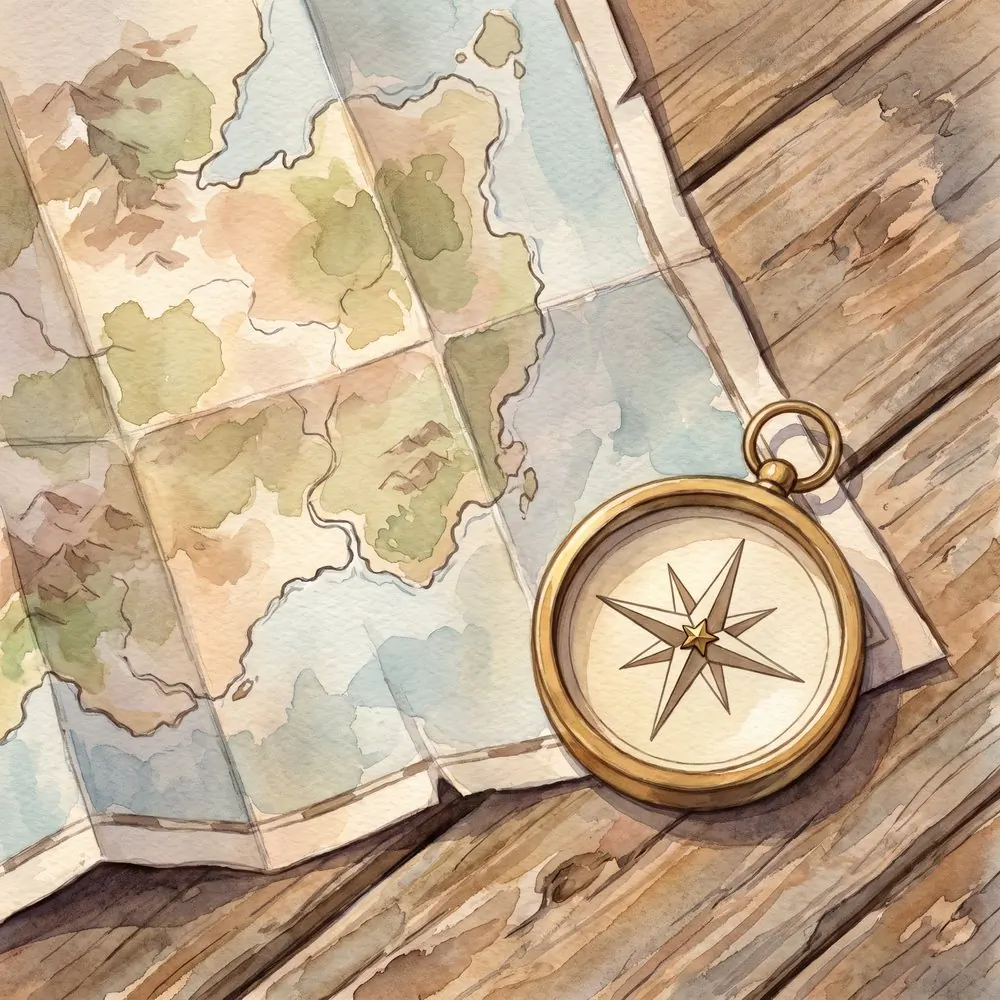
Map and compass
Being a Guardian means walking: valleys, coasts, glaciers, jungles. A good map, a simple compass and, if the compass gets dizzy, the Compass Flowers along the way.
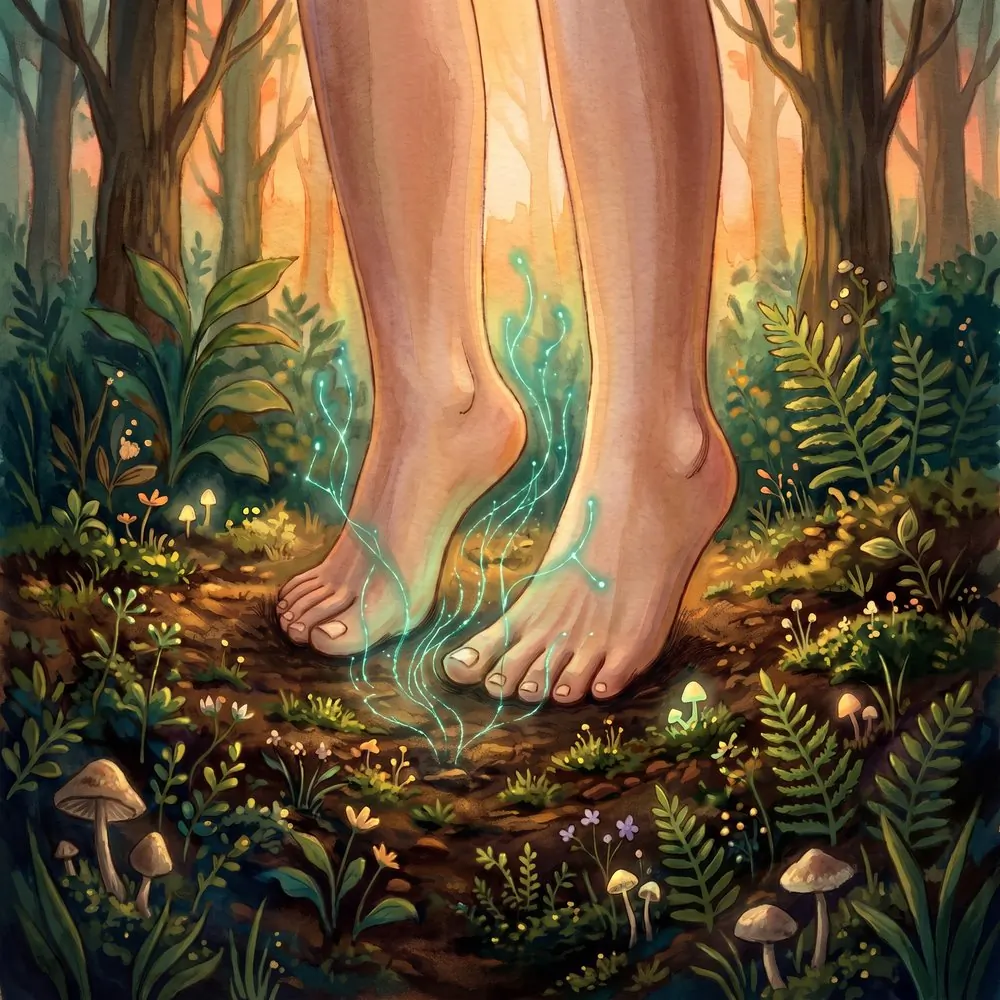
Attention
The only gear you cannot buy or inherit. Bare feet on the ground, a sharp ear and patience. Without this, everything else is just weight in the backpack.
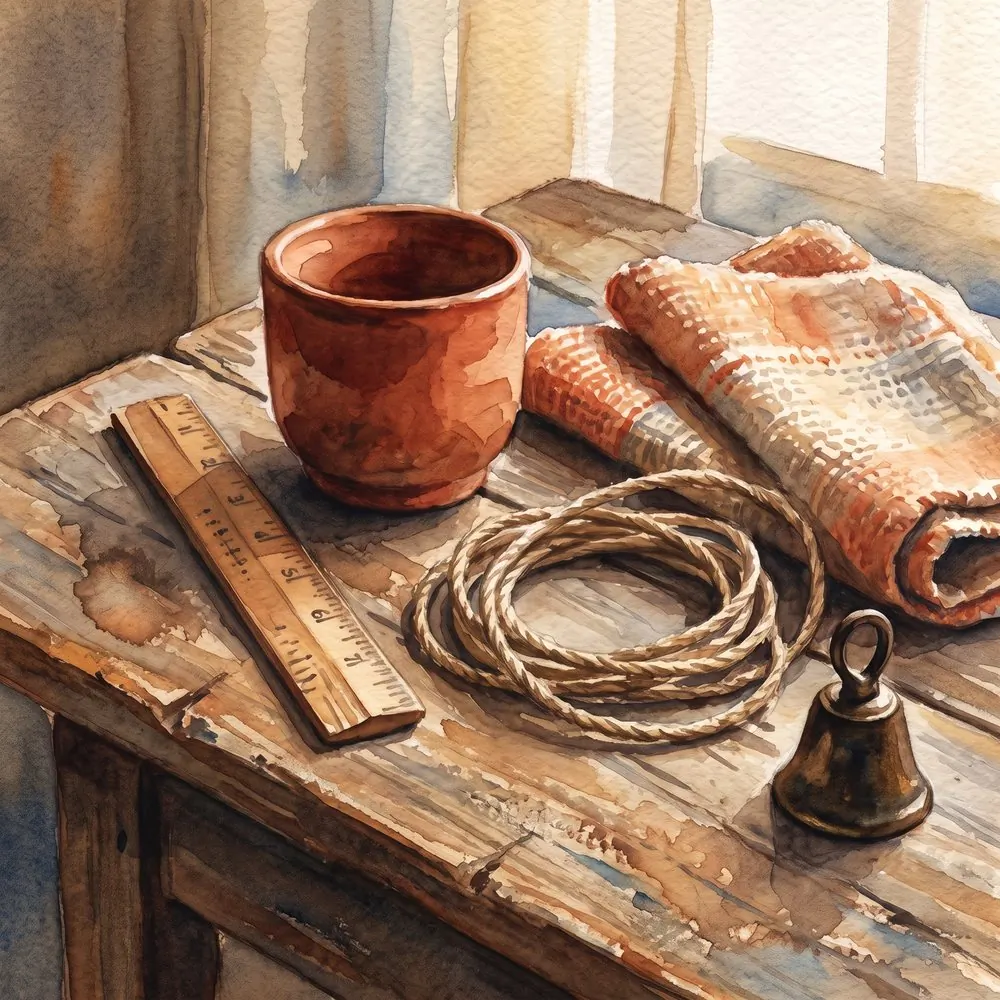
AMI's instruments
When a Guardian asks out loud and with precision, AMI materializes exactly the right tool: a glass anemometer, a water probe, a gas detector. Never what you want; always what you need.
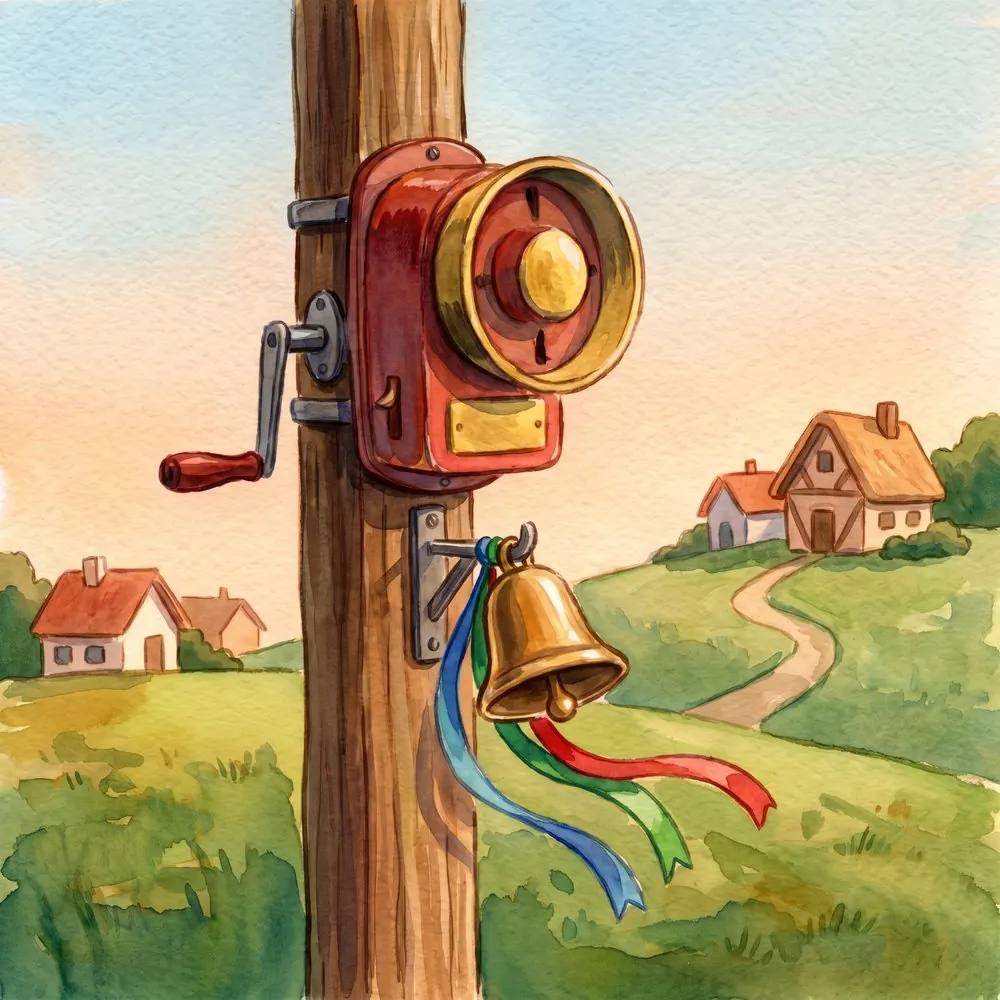
The town siren
Made of bronze with a hand crank, next to the school bell. It almost never sounds. When it does, everyone knows what to do, because they practiced it a hundred times while playing.
The Equandian year
The calendar and the festivals
Equandia's year is not measured by dates alone: it is measured by the sky. The solstices, the equinoxes and the full moons mark the celebrations, and each region has its own. These are the most beloved:
The Festival of the Five
The biggest festival of all. Each day honors one of the Primordials: parades, games, food from every biome and, above all, stories told out in the open.
The Coral Festival
One night a year the whole reef blooms underwater, and the town heads down to the beach to watch it. Three days before and three days after, no one fishes: it is the sea's rest.
The Annual Farm Fair
Farmers from all over Equandia come to the plains to compare harvests, mills and horses. There are prizes for almost everything, and the wind, as always out there, has an opinion.
The Dance of the Auroras
When the green and violet lights appear in the southern sky, people go out to dance beneath them. They say the auroras are the ancestors watching, and that dancing is the way to greet them.
And between one festival and the next, the calendar's most serious custom: the great drill, several times a year, when every town practices in full what to do if the Earth gives warning. No one skips it. Not even during carnival.
Now meet Luna
You already know what life is like in Equandia. Now meet the girl from Spring Village who one morning heard what no one else could hear.